Saturday, August 27, 2011

How Much High Season Fresh Produce a Dollar Will Buy

Her name was Mrs. Miller.  She taught us 7th grade Social Studies.  She was tall, pretty, with fluffed hair, and she wore dresses, high heels, and stockings as all women teachers did then.  All else about her is lost except for the fact that she'd been to Africa which made her very exotic in our eyes.  Any place in Africa earned equal points so it didn't much matter which country, not that I even remember.  But though I've forgotten almost everything else about the class, I remember a class-mate holding up his hand and asking, "How much would it cost to feed a family of four for a month?"  The year was 1951.  So we can make that an even sixty years ago.

Mrs. Miller considered a moment and then said, "I'd say it would cost $50 a month."  But she also made it known that might be on the high side.

I've obviously never forgotten that comment and have (also obviously) gone into sticker shock when it seems to cost more like $50 a day now.  Fruits (and some vegetables) seem like pieces of gold ... which is why I look forward to this time of year.  Their season.  So, when we now have bins of fresh beans, boxes of fresh berries, tomatoes, I'm a little surprised to shell out quite so many dollars but admit to "understanding" the prices because they've crept up so gradually, they almost seem normal.  But I also realize there's very little you can buy for under $1.  Maybe a banana.  (Not even a chocolate bar.)

I decided to do a study here of just how much fresh produce I could get for a dollar.  Most of it fresh local produce.  And unless otherwise noted, all of it organic.  And all purchased at a local farm stand or farmers market.  (No supermarket stuff here.)  (The spoon is supposed to show scale.)

Here each item is $1:  one tomato ... 2 cucumbers ... this much avocado
Speaking of cucumbers, these two lemon cucumbers came to 87¢ so I cut off part of a third to equal $1

In fact, the whole clump of broccoli cost $2.30 from the farmer who grew it, so I had to lop off more than half to get to my $1 amount

Here's the best deal, all four for $1, also bought from the farmer who grew them

$1's worth of local organic blueberries
White non-organic peaches
The princesses of them all  (in a gold-rimmed-dish, no less)--four organic cherries at 25¢ each.
Finally, here are a few non-produce items ... but still obtained from local sources.
$1's worth of Black Back Flounder (try saying that one quickly) from our local fish store.
A baked South American meat pastry from the farmers market.  Pretty itty-bitty for $1 and it wasn't very good.

And finally, here's some local cheese.
 $1's worth of this 2-year aged cheddar only came to 1 oz.


What Makes August August

Cucumbers, tomatoes, peppers, summer squash
Efforts to finish up house projects
First day of school (that used to be in September!)
A noticeable but not yet significant cooling
A noticeable but not yet significant darkening earlier
The sense of something ending, something changing


Saturday, August 20, 2011

From Polar Bears to Banking ... with "That Orange Plastic Olivetti Typewriter Feeling" in the Middle: Recent Documentaries

In the right-hand column here, "Good Movies I've Seen Recently," you'll see that a number of them are documentaries.  I've been watching some splendid ones--delivered by the postman in those little red-and-white envelopes.  Thinking you would enjoy them as well, I thought I'd bring them to light.

A particularly excellent one is Earth (2007), narrated by James Earl Jones, and featuring (but not limited to) a polar bear family, a herd of elephants in Namibia, and a humpback whale mother and calf that swim from tropical waters to the Antarctic.  The photography is truly amazing with close-up shots you wouldn't believe.  There is also some splendid time-lapse photography, some laugh-out-loud moments, and an especially gripping shot of flying above what then immediately drops away into Angel Falls, Venezuela--the world's highest.  This is a Disney film, but not gushy.  Wonderful for everyone.

In another vein, I've watched three with an artistic bent.  Kings of Pastry (2009) deals with French pastry chefs who want to win the Meilleur Ouvrier de France that allows them to wear the coveted blue, white, and red striped collar of the country's best pâtissiers.  They are not in competition with each other.  Any number might win.  But in this film sixteen meet in Lyon, France, for three days of highly intense labor as the drama unfolds.  Did you know you could hold your breath watching someone maneuver sugar sculpture?  They rehearse long hours beforehand since the test/competition only occurs once every four years.  You're right there with them, oohing and ahhing, hoping nothing goes awry.

Perfection (and reflection) from our local farmers market pastry maker

Milton Glaser:  To Inform and Delight (2009) is an excellent view of this graphic designer whom few know by name but whose works are totally familiar.  The "I (heart) NY" poster is one.  The Bob Dylan poster another.  Hard to describe; look him up and check out his logos, drawings, ad campaigns.

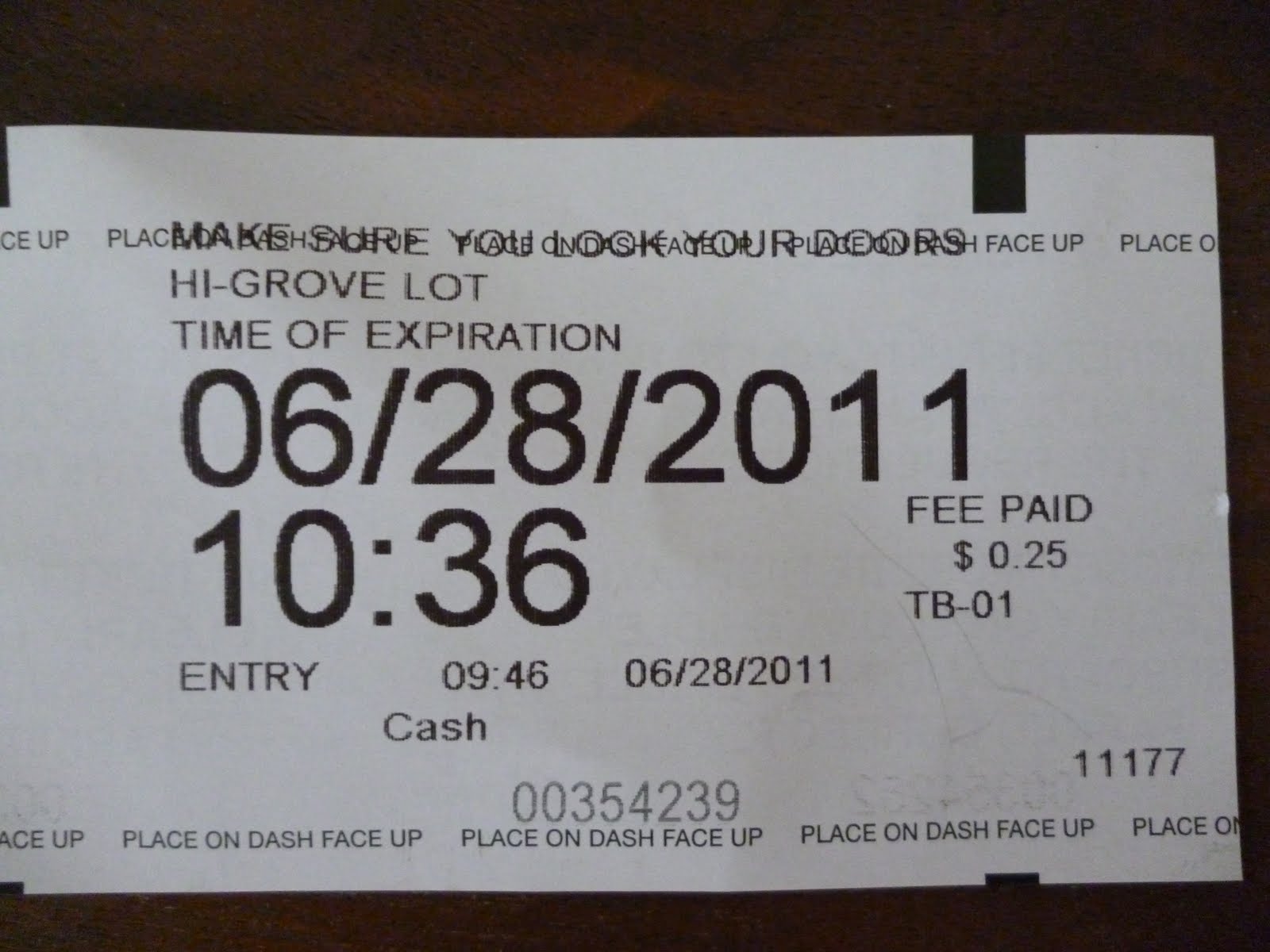
Helvetica (2007), also excellent, speaks of this font that is now nearly fifty years old.  A sans-serif with a clean, neutral look, it has become something of the default font, especially in signage and advertising.  It's particularly popular in Europe.  You also see it in New York City's subway signs ... and the U.S. income tax forms.  It's neither saucy nor staid, just pleasantly rounded and healthy looking.  When I went grocery shopping the morning after seeing the film, I found that I had to be careful driving because I kept looking for (and finding) Helvetica.  On highway signs, the sides of trucks, buildings I passed.  Here (in Helvetica) is how one man in the film described it--he said the font gave one "that orange plastic Olivetti typewriter Roman Holiday espresso feeling." 
I found a sample on a pay-to-park ticket in my car
Freakonomics is a film based on the book by the same name--about the mix of popular culture, economic theory, and various statistics as it focuses on sumo wrestlers who cheat, the impact of the name one is given at birth, and ninth graders who are given bribes to see whether or not they will pass their courses.  Totally off the wall.

Then there are three excellent documentaries about current corruption.  You know, the power, greed, fraud stuff that's been going on.  Hacking Democracy (2006) deals with the extensive use of voting machines and how they are easily hacked.  (Very gripping.  Will anyone ever trust an election again?)  Casino Jack and the United States of Money (2010) is about lobbyist Abramoff and the fraud, conspiracy, and tax evasion that sent him to prison.  And Inside Job (2010), an Oscar winner narrated by Matt Damon, details the 2008 economic collapse and corrupt banking practices. Good stuff.


Saturday, August 13, 2011

Turning a Photo into a Painting: From Dark to Definition

Many artists don't approve of painting from a photo.  I do it for landscapes because it's often hard to find a comfortable shady spot to sit and paint ... or, if I do find one, then the scene in front of me isn't right ... or, even with a hat, the sun can get too hot ... or ants start crawling up my legs ... or it starts to rain.  So I often take photos and turn them into paintings in my studio rather than sit outside and paint plein air.  (However, I always do still lifes and flower arrangements from life.)  But now I thought it would be fun to show some Befores and Afters:  the photos I took and the paintings I then made from those photos.

What is important to keep in mind is that I don't follow the photo precisely.  I use it as a reminder:  composition ... what I felt about the scene when I first saw it ... and color, even if it's very dark as these photos are.  Take the immediate picture below.  I took it at sunrise in the Ladakh region of India, the mist not yet burned off, the Indus River only just evident as the sky lightened.  To my eye, the glories of the rising sun (which I could not yet see), obliterated the far scene but turned the nearer one rosy.  And a lovely viridian or even emerald green in the very left center indicated distant mountains.  So, I extrapolated a bit and put that color into the sky as well.  Also, though the photo reveals only the barest hint of sunlight on the middle-ground mountains, I remembered the scene as being lighter and so painted it that way.

The photo
1.  The oil painting.  (The symbol on the bottom middle is the Tibetan for "Om.")

Here is a similar shot taken from Pokhara, Nepal, when the night mists were giving way to the build-up of the morning's clouds that soon hid the mountains.  The sunrise here is evident on the high peaks.  As for the large cluster of bamboo on the lower right, it seemed too unidentifiable for the space it took up, so I left it out.  Nor did I like the left-hand tree "invading" the mists.
The photo
2.  The oil painting

Below is a Vermont scene that really only comes alive once it's painted.
A storm in May

This time I made two paintings--an oil and a watercolor:

3.  The oil painting

4.  The watercolor

Next is a photo I took on a walk early one summer morning when everything was enveloped in fog.  I obviously saw something that the camera muffled but that I was able to translate to the painting.


The photo
5.  The oil painting

Below is a winter scene just a little farther down the road from the one above.  I enjoyed enhancing the sky's lemon color.


The photo

6.  The oil painting

And a different view from the same place:


The photo
7.  The oil painting
Finally, here's another picture from the same area.  The photo is not quite as dark as it appears here.  I had fun finding a greenish color in the grey clouds and mirroring that in the middle tree.

The photo

8.  The oil painting

The paintings:
1.  Where the Indus Meets the Morning
2.  The Himalayas From Pokhara
3.  May Storm
4.  May Storm, Watercolor
5.  Foggy Morning
6.  Winter Light
7.  Winter Along Kipling Road, Oil
8.  A Random Afternoon

Another time I'll do a similar series with a different emphasis.

Saturday, August 6, 2011

It's 4:53: Who Will It Be? Chris Matthews or Robert Frost?


If I had a hammock, I'd go lie in it these mid-summer afternoons, but since I don't, I settle in a chair around 4:30, put up my feet, and sit a bit, putting aside the busy part of the day and shifting to a time that will rest my bones.  I've figured out supper, maybe even done a bit of prep work.  I've poured something refreshing to drink.  I pick up a newly-arrived New Yorker.  Or, lately, with the news heating up, I watch Chris Matthews at 5:00, even with its interruptions, everyone talking at once, and head butting stuff.  But, soon enough (usually by the first commercial), what with all the partisan nonsense, political grid-lock, and posturing, I shake my head and turn it off.

(A bit of background here now.)  Sometimes, realizing I haven't turned to them in quite awhile, I make a project of re-listening to my old 33 RPM records ... or re-reading my books of poems.  Recently, not wanting to keep filling my head with those Beltway bashings, I got out my Robert Frost from college days, set it on the coffee table (where I'd be reminded to read it), and then went about my work.  A good solid Modern Library edition, it's a sturdy little book, easy to handle, easy to flip through.  As I set it down, I decided that Frost was possibly my favorite poet.  

A bit later, when it was in fact time to put up my feet, I sat awhile then saw that it was 4:53, nearly top-of-the-hour Chris Matthews time.  I looked at the remote control there beside me ... and I looked at my old college book there on the coffee table in front of me.  Which would I choose?  Voting for something meadowy, I picked up Frost and spent the rest of the afternoon amid stone walls, pasture springs, and star-like fireflies in the garden.

I've always liked Frost's common sense, his matter-of-factness, his home truths, edginess, and little surprises co-mingled with such language as "By June our brook's run out of song and speed." (1)  Or "Never tell me that not one star of all/That slip from heaven at night and softly fall/Has been picked up with stones to build a wall." (2) 

As I sat there, I re-read the two poems ingrained into the national psyche--Stopping by Woods on a Snowy Evening ("Whose woods these are I think I know...") and The Road Not Taken ("Two roads diverged in a yellow wood...").  And the only poem I still remember by heart because, after a dear friend gave me a broadside of it that she'd made in a letter-press printing class, I hung it up and so see it everyday.

Dust of Snow

The way a crow
Shook down on me
The dust of snow
From a hemlock tree

Has given my heart
A change of mood
And saved some part
Of a day I had rued.

I also re-discovered Mowing, Mending Wall, The Oven Bird, A Time to Talk, New Hampshire, A Question, Fire and Ice.  And these:

Devotion

The heart can think of no devotion
Greater than being shore to the ocean--
Holding the curve of one position,
Counting an endless repetition.


Happiness Makes Up in Height For What It Lacks in Length

Oh, stormy stormy world,
The days you were not swirled
Around with mist and cloud,
Or wrapped as in a shroud,
And the sun's brilliant ball
Was not in part or all
Obscured from mortal view--
Were days so very few
I can but wonder whence
I get the lasting sense
Of so much warmth and light.
If my mistrust is right
It may be altogether
From one day's perfect weather,
When starting clear at dawn,
The day swept clearly on
To finish clear at eve.
I verily believe
My fair impression may
Be all from that one day
No shadow crossed but ours
As through its blazing flowers
We went from house to wood
For change of solitude.


A Frostian scene with its New England stone wall
(1) Hyla Brook
(2) A Star in a Stone-Boat

(Since Frost's poems are now in the public domain, it's okay to include them here.)

Saturday, July 30, 2011

A Cool Supper for a Hot Summer Evening

Ah, the high days of summer--that time we've been waiting for when we can go off to a farm stand and fill our bags with glorious fruits and veggies, all newly picked and often only transported as far as it takes someone to carry them in from the field.  Or to put them in a pick-up and drive them to a farmers market.  Bins of baby cauliflower, green beans, cucumbers.  Heaps of ripe juicy tomatoes.  Light purple or black elongated eggplants.  Green and yellow summer squash.  And a goodly number of lettuces--leafy reds, tiny compact Tom Thumbs, light-green buttery heads.  After bringing my purchases home and spreading them out to admire, I store some in the fridge and set others in a bowl as if they are a colorful still life.

  
Great juxtaposition of colors and shapes here.  (For those savvy enough to spot it, no, this isn't my new countertop.)

Not all that long ago, inspired by what I'd bought, I set to work constructing supper for myself.  It turned out pretty well, I must say.

First, pour yourself a glass of chilled white wine to sip as you work.  One of those Portuguese vinho verdes would be good.  Light and crisp.  A jazz CD or some classical guitar would be fun, too.  You might even want to put on a pretty apron if you still have one.  (Obviously, adjust amounts for the number of people being served.)

1.  Chicken.  Use a boneless, skinless breast.  Marinate all day in a little olive oil into which you've mixed a bit of turmeric.  (Keep it covered in the fridge.)  When ready to cook (that's when you put on the music, the apron, and pour that glass of wine), finely dice one shallot, saute lightly, then set aside.  Add chicken breast to the same pan and brown a couple of minutes on each side.  Turn down the flame, add a little water to the pan, cover, and cook slowly, maybe 25 minutes, adding a bit more water only as necessary.  Let rest.  To serve, slice.  For a sauce, warm up the sauteed shallots in the pan juices, then add a little mayo.

2.  Cold cauliflower soup.  Saute 1 diced vidalia onion.  Then add a touch of turmeric and saute for only a minute more.  Add 3 c. of chicken stock, the florets of 1 small cauliflower, 1 t. vinegar, some salt, and maybe 3 T. couscous.  (The couscous acts as a thickener.)  Let cook partially covered for maybe a half hour.  Puree and serve at room temperature.  If you like, you can add a splash of half-and-half when serving.  (This is my tweaking of a Julia Child recipe for a cold cucumber or zucchini soup which I haven't actually followed for many years but do want to give credit to.)

3.  Filet beans (haricots verts).  Blanche by dropping into boiling water.  Test frequently to get the timing just right, then remove when cooked but still a bit crunchy.  (This won't take very long.)  Cut into pieces.  Add very thinly sliced or diced red onion.  Dress with a vinaigrette just before serving.

4.  Easy ratatouille.  Slice and briefly saute 3 very small zucchini in olive oil.  Remove from pan.  Do same with 1 onion.  Do same with 2 small elongated eggplant.  (Do them last.)  Then mix all three and spoon in some tomato-basil sauce.  (I used a bit of left-over pasta sauce, but fresh tomatoes and basil could be added quite simply.)  Serve at room temperature with a wedge of lemon.

5.  Dessert.  Any berries now in season!!  Add a spot of cream to the bowl.  Or a bit of vanilla ice cream.  Or nothing at all and just savor how lovely they are.
It's great that berries don't all ripen at once ... first strawberries, then raspberries, then blueberries.  Yum!
Even if you're dining alone, take along a pretty cloth napkin, a fresh glass of wine, and carry everything out to the picnic table if you have one.  Afterwards, in the summer evening's late light, sit down with a fan and that good book you're reading.  Or whatever DVD is next in line.

What Makes July July

Electric fans
Swimming suits drying on the line
Fresh raspberries ...
And good people who let you go pick theirs
Weekend company
Music festivals

Saturday, July 23, 2011

Keepin' Cool

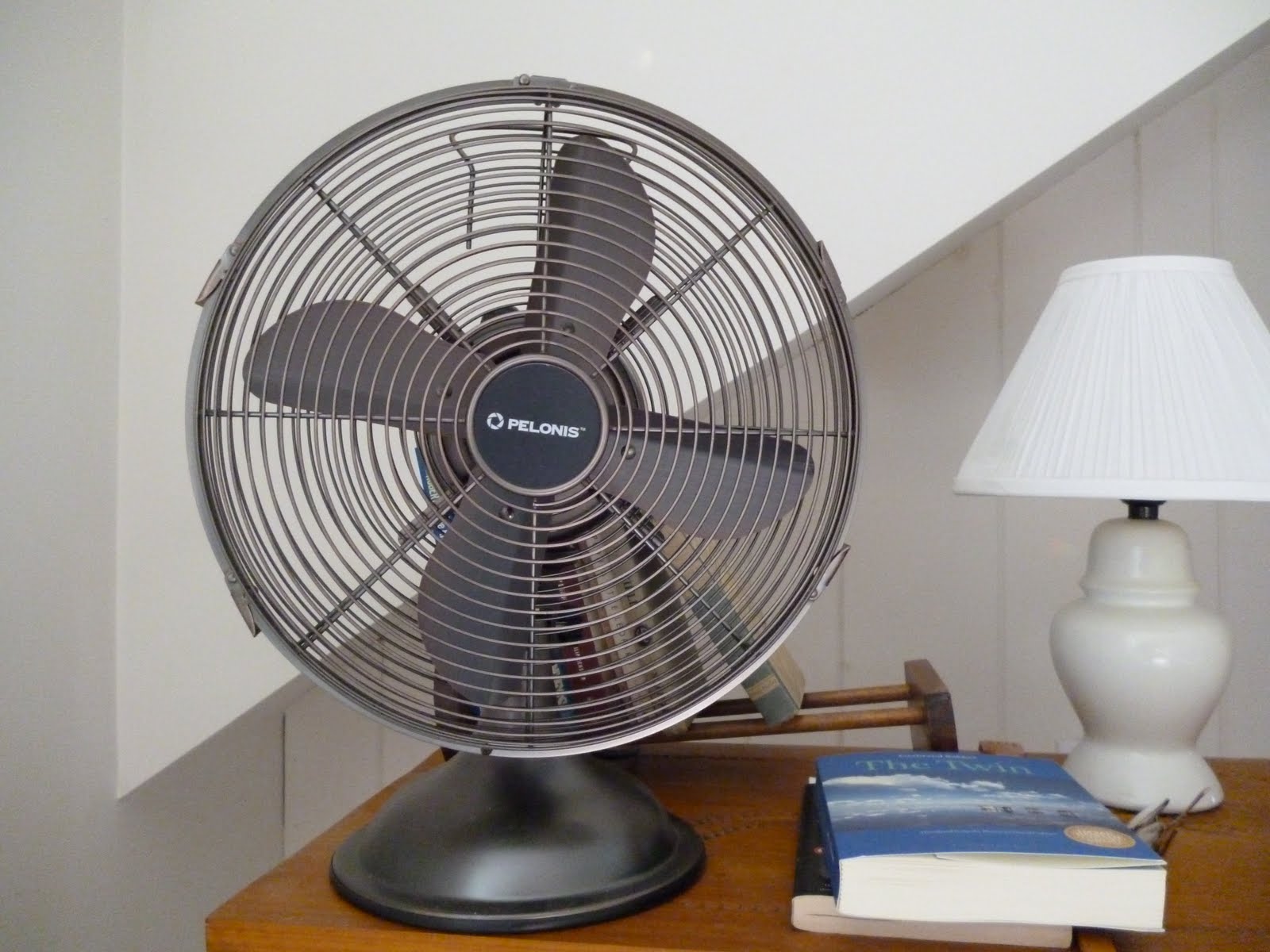
It's heat wave time.  This isn't a part of the country that usually gets all that hot.  But when it does, it does.  I've never lived in a house with A/C--or a ceiling fan.  I do have a portable electric fan.  I also have a collection of those cute little hand fans--though they're not that much help in the sort of heat we're now having.  But they do have the distinction of being green.  And good if the grid goes down.  Mine include a sandlewood-scented fan from Thailand and another from Bali.  Two Balinese woven straw fans.  A paddle fan from Hawaii.  And two mini paper fans made in China

However, when the days get really hot, such as they are now, I sometimes need to turn to my one source of A/C--my car.  Like yesterday when I simply had to drive around for awhile to regain my equilibrium.  I didn't have a destination; I just drove out into the countryside, along a pretty river, then turned around and came back.  It helped.  

In fact, few houses around here do have A/C.  One friend hies himself off to the public library for a few cool hours.  Another carries around a spritzer and, rather like moisturizing a plant, she spritzes her face, arms, and hair.  One has a secret spot where she goes skinny dipping.  Families buy a seasonal pass to swim in a nearby lake.  Or they get out their little plastic pool in the backyard.

I used to make what I called sun tea in the summer--simply 3 herbal-blend tea bags dropped in a container of water and set out in the sun to steep.  Then I heard a program advising against doing that--that that can produce yucky bacteria.  Better to let it steep in the fridge, it said.  So instead of sun tea, I now make fridge tea.  It's a pretty color and is wonderfully refreshing.  And it has the advantage of having no real sugar, no fake sugar, and no high-fructose corn syrup. 
Fridge tea with its three tea-bags

So while the heat lasts, I take it as easy as possible, turn on my electric fan, keep that iced drink at hand, and read a good book to take my mind off things.  Right now I'm reading The Twin by the Dutchman, Gerbrand Bakker.  I recommend it.  Anyway, just reading about the protagonist going for a good long ice-skate on a frozen lake can be cooling, too!  Of course, getting back to reasonable temperatures would be even better.
My stand-by

...

Saturday, July 16, 2011

Street Fun and Fireworks: Bastille Day in Avignon

The Palace of the Popes, Avignon

Let me set the scene.  It's a high summer day, the sky blue, the air hot and aromatic with the scent of pine, laurel, lavender.  If a wind rises--and the wind can blow!--it flips over the leaves revealing their soft silvery side.  White doves coo; cicadas sing.  The honeyed heat empties mid-afternoon café chairs.  But diners reappear under the plane trees at dusk.  In one restaurant where we consume spring rolls with mint sprigs and fish sauce served on delicate Vietnamese plates, a caged bird whistles the Marseillaise.  We climb up to the park above the Palace of the Popes, the Palais des Papes, and feed bits of bread to the pigeons, ducks, and swans.  Sometimes, we go there for picnics taking along baguettes of fresh crusty bread and rounds of goat cheese, slices of ham, plump apricots peaches cherries figs, a bottle of red wine, paper cups.

My sketch of the swans and ducks

It's July and we're in Avignon during its maybe two-week-long film, arts, and theater festival which coincides with Bastille Day celebrations.  The city then becomes its own al fresco theater--the Palace walls, steps, stonework, the streets and sidewalks are all part of the set.
A "bird cage" (which children love to enter) covering much of the sidewalk.  (Note the two towers at this particular gate in the city walls.)

Same sidewalk, on up a ways--a maze to walk through if anyone is so inclined.
A square in the middle of town with a set of drums in the upper right.

Out in the square by the Palais des Papes, ZouZou, the mime, either commits hara-kiri twice a day (for stealing his mother-in-law's jam) or he becomes Tarzan, dividing those of us in his two-hundred-plus audience into groups of animals.  When he gives his jungle call, the elephant group bellows.  The lions roar and show their teeth.  The monkeys (our group) chatter and scratch.  The snakes hiss and flick their tongues in and out.  Then Jane appears, combing her hair.  Tarzan's eyes roll.  He sidles over and strangles a troublesome lion on the way.
ZouZou outside the Palace of the Popes

Elsewhere, a puppet grandmother keeps liquor in her teapot and smokes a pipe.  A three-legged man and two girls on stilts maneuver the streets.  A dwarf tap dances but never walks because his hands belong to one man and his feet to another.  A green girl with hair hanging down over her glass eye hands out leaflets.  Peruvians play pan pipes and drums.  Someone with his eyes shut pretends that a folding ruler is a saxophone.  (The actual saxophone player is underneath a large piece of plastic.)  A goat balances on a platform the size of a teacup.  A man wearing roller skates and a tall crown of advertisements carries a chair, sets it wherever he pleases, and sits awhile.  A man follows people imitating their moves.  Someone sells bird whistles that fit inside the mouth.  We get a silhouette cut and two caricatures done.
The man with his roller skates and tall crown of advertisements

With evening, everyone drifts down toward what remains of Avignon's medieval bridge over the Rhône, the same that inspired the well-known song, "Sur le pont d'Avignon."
Avignon's medieval Pont St-Bénézet that no longer spans the Rhône River

There, on the bridge, costumed boys toss flags.  Girls in Provençal dresses hold hands and dance a serpentine.  Letters spelling "liberté" light up as red smoky flares seem to engulf the whole bridge in flames.  Then to the soundtrack of electronic squeaks and boops, combined with French folk tunes and a hint of something Japanese, fireworks sizzle up over the river like climbing golden insects to fall and climb again in white sparkles.  Some wiggle like colored worms.  Some zoom up like the trunks of trees and then shoot off like branches.  Some seem to hang in the air like great golden jacaranda blossoms.

Our visits encompassed two Bastille Days.  July 14, 1980 and 1984.  (Followed by other non-Bastille Day stays.)  It's a favorite spot that I always remember this time of year, along with its blue sky, honeyed air, and that crusty bread.