Showing posts with label food. Show all posts

Wednesday, July 18, 2018

A Bit of Reminiscing


Breakfast in the 1940s

We get so used to the way things are that we forget how they once were.  For instance, when I go to buy meat--I get pre-packaged meat; alas, our good butcher closed--there are basically five choices:  lamb, pork, beef, chicken with ground turkey in the freezer.  Back in the '40s and '50s, my mother used to come home with mutton, heart, tongue, liver.  Bones were free.  We also ate a lot of our own rabbit and chicken during the war, rabbit being as common on our table as chicken.

The veggie department, on the other hand, had many fewer choices.  Stores didn't carry such things as bok choy or broccolini or rainbow chard or fennel.  Or even a variety of fresh herbs, though there was always parsley, free for the taking, since it acted as a display decoration. So there was nowhere near today's choice, but then, if I'm correct, we also didn't have the problem of pesticides in our food, everything then being still organic.  And no one had yet invented that GMO horror.

Rainbow chard


When I was growing up, watermelons were a half cent a pound.  Except for bananas, if you wanted something exotic like papayas or mangoes, you had to visit a place with a tropical climate.  I remember my father (who, being an Easterner, had spent summers in Maine as a boy) once told the story about the time he was at Paramount filming a movie.  (In the '20s or '30s sometime.)  The film was set in Maine and had a scene where the set designer had placed a bowl of persimmons on the dining room table.  At that, my father complained, saying that was not realistic as no one in Maine even knew what a persimmon was.  Persimmons were a California thing.  (We even had a persimmon tree in our back yard.)  But the set designer didn't care and simply left it there.

I also remember the day mayonnaise came back on the shelves after having been non-existent during the war.  My mother sent my brother and me up to the corner grocery to buy a jar.  I was in third grade.  We also found bubble gum for sale, something I'd never heard of though my brother (who was older than I) seemed to know about it.  Soon after, we saw our first bag of corn chips.  I'd say that was 1947.

My mother was what is now called a "stay-at-home-mom"--then called "a housewife".  (No one called a woman "a mom"; only one's children used that term.  A woman with children was "a mother."  Like in Happy Mother's Day.)  So, staying home, she made fudge, pineapple upside down cake, scalloped potatoes, meatloaf, creamed tuna on toast, waffles --start to finish, everything from scratch.  There were no packaged mixes, no take-out, no micro-waves, no frozen dinners.  At least not just then.

We ate home-cooked, wholesome.  Not exotic.  No garlic, no mushrooms.  A little tabasco or paprika was about as adventurous as we got.  Plus poultry seasoning in turkey stuffing.  The only pasta was spaghetti or macaroni. Chicken was usually floured and fried in fat.  Or it was boiled, boned, and made into a gelatin aspic, particularly nice on hot days.  Salads were iceberg lettuce with mayonnaise.  Or Waldorf salad with apples and walnuts.

Then things started shifting and the first fast food burgers arrived.  They cost 15¢.  That was maybe 1954.  I had my first pizza in 1955.  It was then called pizza pie.

Until they closed up, my mother adored going to drug store soda fountains, sitting on a stool, and getting a nice coke with a squirt of cherry or lemon syrup mixed in.  Or else she got a chocolate ice cream soda.  The "soda-jerk" (usually a young man) made it as you watched.  A tall glass with a scoop of vanilla ice cream, some chocolate syrup, and a splash of soda water, all mixed together with a long spoon.  Then more ice cream, syrup, and soda water with whipped cream on top.  Being so fond of them, my mother used to reminisce about the last ice cream soda she ever got.  It was at the drug store on San Ysidro in Santa Barbara.  It had cost 45¢.  She could make them herself and did sometimes.  But it was never quite the same.


Reminder:  All rights reserved.  This blog and all original content, including photography, are the property of the author unless otherwise noted.  No part of this blog may be copied, published, or distributed without permission.


Wednesday, August 31, 2016

Savory Tomato Tart


Ah, it's tomato time.


This is the kind I used for this recipe

And my local farm stand always puts out a magnificent array of plump, gorgeous, juicy tomatoes.  So .. a few days ago I realized it was time to get out my good savory tart recipe which I then proceeded to make up yesterday.

There are two preps here.

1.  One is to make a crust for a 9"-10" pie dish.  Preheat oven to 400 degrees.

1 + 1/2 c. flour
1/4 lb. butter (one stick)
1/4 t. salt
4 - 5 T. ice water.
Cut the butter into the flour (and salt) so that it's the size of small peas.  Add enough ice water to form the dough into a smooth round ball.  Roll out.  Place in the pie dish and bake for 8 minutes.  (I put in a piece of foil and scattered some of those pea-like ceramic pie weights.  Not sure how necessary they are, but they do keep the crust from puffing up.)  Let cool.  Turn off oven.

After pre-baking for 8 minutes


2.  The other prep is for the filling.

3 lb. tomatoes.  Drop 2-3 at a time into boiling water for 20 seconds, then peel.  Cut each in half cross-wise and dig out the seeds and juice without being too vigorous about it.  In other words, don't squeeze the tomatoes.
1 medium-sized onion.  Dice and sauté in olive oil.  Be careful not to burn.
1 clove of garlic.  Mince or press.  Add to onion at end.
Give the tomatoes a rough chop and add them along with:
3/4 t. dried oregano
4 T. chopped fresh parsley
4 T. chopped fresh basil
Salt and pepper
Turn burner to medium low and let this all cook awhile.  I gave it about 20 minutes.

Fresh parsley and basil


Pour the tomato mixture into a colander placed over a bowl and simply let the juices drain into the bowl.  I allowed 10 or 15 minutes for that.

Letting the juices drain out of the tomato mixture

Then, return those juices to your pot and let them reduce down at a simmer.  Watch carefully so that they don't start to brown.  Turn off the heat, put the tomatoes from the colander back in the pot, and mix them with the reduced juices.

Let cool.
When you are nearing the time to complete the tart, preheat oven to 375.
Beat 2 eggs
Add in 1/3 c. mayonnaise and beat until smooth.
Grate 1/4 pound of a nice sharp cheddar cheese and divide into two piles.
Add the egg/mayo to the tomatoes.
And stir in one pile of cheese.

Two piles of cheese


Two eggs, whisked

Pour into the pie crust and sprinkle on the second pile of cheese.

Ready to put in the oven


Bake 30 minutes at 375.

The final thing ... yum!!


Saturday, October 3, 2015

Pickity Place Revisited


Just a week ago, two family members and I enjoyed our annual ladies luncheon visit to Pickity Place, a charming 1786 little red cottage some distance away in the hills of southern New Hampshire.  Each month features a different fixed menu.  (One's only choice is between a vegetarian and non-vegetarian entree.)  Along with the little cottage, which was used as the model for Elizabeth Orton Jones's illustrations of Little Red Riding Hood (Little Golden Books, 1948), the property features herb gardens, a gift shop, a drying shed for herbs and flowers, a shop featuring seasonal and gardening items, a greenhouse, and a sheep pen along with little paths that one can wander while taking in the picturesque rural setting.

Pickity Place is open daily, year around, except for major holidays.  When calling to make reservations, you can choose between the 11:30, 12:45, or 2:00 seating.  Fixed price at $21.95.  Their web site (pickityplace.com) lists the menu for each month's five-course luncheon that features their herbs and edible flowers along with a choice of tempting beverages:  mulled cider, lavender lemonade, mocha coffee, herbal teas, raspberry orange tea, and hot or cold spice tea.

Water jug refreshed with a peppermint sprig

Hot spiced tea and cold lavender lemonade

(We started with a cheese and fruit dish but finished it before I remembered to take a photo.)

Then:
Potato soup, called Twice Baked Yukon

Salad with citrus, watermelon radish, and featuring a pineapple sage leaf

Rosemary foccacia with a wonderfully seasoned dipping oil
Beef medallions over risotto and burrata with sauteed matchstick zucchini
 and a pea flower.  (The vegetarian choice was Harvest Vegetable Strudel.)


Lemon and blackberry cake with butter cream frosting.
In the Drying Shed


For my first posting about Pickity Place, see "A Visit to Pickity Place," November 12, 2013.  For quick access, go to Topics in the right hand margin and look under Food.


Saturday, July 11, 2015

Cooking for One

Yes, I was one of those who had a large dining room table and came up with dinner party recipes for six, eight, or ten of us.  I had a fine collection of cook books and enjoyed plowing through them for tasty combinations.  (All on an electric stove and no dishwasher.)  Of course, I also fed the family three meals a day for I don't know how many years.  I made sourdough bread, zucchini pickles, yogurt cheese.  We grew our own tomatoes, green beans, lettuces.  Even then (the '70s and '80s) we were concerned with eating as organically and locally as possible.

Then things shifted and I found myself cooking for one.  Over the years, bit by bit, I've gotten rid of most of my cook books.  On yet another downsizing roll, I've now discarded even more.

Here's what's left.


In fact, they no longer fit my life style.  I no longer give dinner parties.  Nor do I know anyone here in my age group who does.  If people do happen to get together, except for Thanksgiving and Christmas, it's potluck or take-out.  (Mostly, we opt for lunch at our favorite Chinese restaurant.)

But cook books have two main flaws for the single cook.  All the recipes serve 4-6 or 8-10 or 10-12.  Not simply one!  Of course, I can cut the recipes in half or in quarter, but then, if it calls for cream, say, I'm using such a small amount, it doesn't pay to buy it and have it go bad in the fridge while I'm thinking what else to do with it.  Or, a recipe calls for 5 egg yolks.  (Which makes a cake I can't possibly eat by myself ... and I don't really know anyone who eats that sort of thing anymore.)  Then there are the egg whites to deal with.

Another example:  I recently re-read Anne Morrow Lindbergh's Gift From the Sea in which she mentions making biscuits.  Ah, biscuits, I thought.  They sound good.  So I got myself a quart of buttermilk and made a good dozen.  But I only needed 2/3 c. of the buttermilk. It never much works to freeze buttermilk ... and I don't like drinking it.  As for the biscuits, I had two for breakfast and put the rest into a container which I suppose will end up in the freezer.  Can you imagine the French (my role models when it comes to food) taking a biscuit out of the freezer and eating it?  They like things to be fresh!  

Then, too, by the time I've adjusted a recipe to my single-status needs, I've left out a lot of ingredients I don't even get because I can't use them up--which means the final product only half-heartedly resembles the original recipe.  So, why even bother using recipes anymore?  Or keeping cook books?  We can always go on-line to hunt something up.

There's also the seasonal issue.  When it's tomato season, I can't remember where that tomato recipe was that I once saw.  Or, later, that acorn squash dish that looked possible. 

What I need is someone to come up with The Single Person's Seasonal Cook Book.  Small amounts.  Listed by season.  Not requiring ingredients that are only sold in prescribed amounts that will just spoil before I can think what to do with them.

As you see in the photo above, I am still keeping my favorite cook books but probably more for sentimental reasons than anything.  I do still enjoy sitting down and paging through them.

Saturday, November 29, 2014

What People Around the World Eat in a Day

Breaking bread


Some of you may remember that splendid book from a few years back--Material WorldA Global Family Portrait--by photographer Peter Menzel that showed different families in various countries as they stood outside their houses with all their furnishings, coffee pots, harnesses, beds, etc. displayed with them.  It was, of course, a good illustration of the haves and have nots.

Now the same photographer (along with writer, Faith D'Alusio) has brought out a book showing what different people around the world eat in a day.  Whether a plate of burgers topped with multiple soft-drinks or a bowl of gruel.  What I Eat:  Around the World in 80 Diets.

Here are two sites which offer a series of illustrations from the book.  Since we're in our holiday eating mode, it seems a timely topic.


Link number one

Link number two

Saturday, August 23, 2014

An August Supper

A few nights ago a family member joined me for supper, giving me the opportunity to make a couple of favorite recipes--ones I seldom make just for myself.

Since I had recently resurrected my old hibachi, setting it out in the garden where it wouldn't set fire to anything, I decided to make Middle Eastern kebabs from a packet of ground lamb that I had in the freezer.  Being tomato time, it seemed perfect to add a fabulous tomato pie to the menu that I hadn't made for more than a decade.  Then, with cucumbers plentiful, I could toss in a nice cooling Middle Eastern yogurt/cucumber side dish.  So I put on my apron and set to work.


Middle Eastern Ground Lamb Kebabs

1 pound ground lamb
1 slice of white bread, no crusts  (I used a nice, firm sourdough)
1/4 t. ground cumin
1 t. paprika
1 t. salt plus some pepper
A large garlic clove, finely chopped
1 T. tomato paste
1 egg, beaten

Put lamb and bread (torn up) into a food processor and mix well, at least several seconds. (You want to mix the meat and bread but you also want to break the fibers down a bit so that the meat can better stick to the skewers.)  Put into a bowl, add the remaining ingredients, and use your hands to mix well.  Then mold onto your skewers.  I only had 6 so formed the remaining mixture into two patties.  Put on a grill and cook.  This amount could serve 3 people well.


Yogurt and Cucumber Side Dish

Simple.  Grate a couple of small cucumbers.  Mix in some plain yogurt.  I used sheep yogurt, but goat or cow would be fine.  Add a bit of salt and pepper.  And there you've got it.


Tomato Pie

First, make a quiche crust.  The recipe I used for an 8" pan follows:
1 & 1/2 c. flour
1 stick butter
5-6 T. ice water
1/4 t. salt
Prepare as you would any pie dough.  Preheat oven to 400º.  Roll out, arrange on pie plate, prick bottom of crust, and pre-bake for around 8 minutes.  I put a few of those little round pie weights in the bottom but am never sure if I need to.  Take out of oven to cool.

Then, make the filling.  This takes awhile.
3 lbs. of tomatoes.  Drop 3 at a time into boiling water for 10 seconds, take out, peel off skin.  Then cut each in half and squeeze out juice and seeds into a bowl.
1 medium onion.  Dice and saute in olive oil.
1 garlic clove, crushed and chopped.  Add to onion.
Chop the tomatoes and add to the pot along with: 
Salt and pepper
A pinch of dried oregano
3 T. chopped fresh basil
Let cook a bit.  Then remove from heat and put onion/tomato mixture into a colander.  Collect the juice underneath the colander and pour that back into the pot to reduce down until it becomes a thick sauce.
Transfer onion/tomato mixture to a bowl and pour in the reduced juice.
2 eggs.  Beat and add 1/3 c. mayonnaise.  Add this to the cooled tomatoes and reduced juice.
1/4 lb. sharp cheddar cheese.  Grate.  Put half into tomato mixture.
Spread that mixture into the crust and top with the remaining cheese.
Bake 30 minutes at 375º


Here 'tis.  I have to say it was fabulous!


Saturday, April 5, 2014

Santa Fe Eats

On my recent trip to Santa Fe, I tried out some new eating spots--both new to the town and new to me--and also returned to some old favorites.  I consider the diversity and quality of restaurant fare there to be top notch.

New spots:

1.  Izanami features "Japanese-inspired seasonal small plates."  Newly constructed at the 10,000 Waves Japanese Spa a few miles out of town.  Very airy, high ceiling, Japanese lanterns, comfy booths, tasteful decor, classy food.


After miso soup, my entree here was sushi rice, 2 pieces of chicken, a topping of slivered veggies, and a ginger dipping sauce.

Dessert was panko encrusted banana with a caramel sauce

2.  Midtown Bistro.  Highly popular. As soon as the lunch hour arrived, it filled with reservation holders.  A bit noisy but a pleasant atmosphere.


I got the half-sandwich/cup-of-soup special with a small mixed green salad.  The sandwich was roasted pork loin with caramelized onions, fontina cheese, and honey-mustard aioli.  Key lime pie for dessert.


3.  Sweetwater Harvest Kitchen which features organic, gluten-free, and sustainably farmed items.  Another very pleasant atmosphere.

I joined two friends here for supper.  I got the duck breast with roasted veggies in a sauce of figs and cherry mead.

New spots for me but not new to the town:

4.  La Choza.  Where the locals go for quality New Mexican food.  Tons of cheese, chiles, beans, and fried rice.  It fills up early on with families.


Posole, beans, and a blue-corn tortilla enchilada

5.  Burro Alley Cafe.  Right in the heart of town, easy access, bright and airy, good menu.

I got a chicken crepe for lunch.  Check out that BLUE sky!!
Old favorite spots:

6. Zia Diner.  Always dependable for breakfast, lunch, or supper.  In the Guadalupe Street area.

7.  Steaksmith's on the road out of town.  My friend and I happened to be there on a Thursday evening which turned out to be mariachi night.  4 guitarists, 2 violinists, and someone on the trumpet, all sharing the solo singing spots.  The steaks, of course, are fabulous and the mariachis great fun.


Mariachi Sonidos del Monte

8.  Harry's Roadhouse.  A long-time favorite very near Steaksmith.


My friend and I stopped here for take-out dessert. 


Saturday, February 8, 2014

Some Health Choices

I was reading a piece recently about "the care and feeding of intestinal bacteria."  Oh, fun!  But, for me, it's been an important issue since I needed to load up on antibiotics to (I hope) get rid of the Lyme disease I acquired a couple of years ago.  Which left me with an inflamed gut.  No ... not fun!

So the topic has been forefront for me and I've adopted three foods in particular to re-establish what is called "a healthy microbiota."  My suggestion is that these would be good for anyone to incorporate into their regular diet.  These are three naturally fermented foods with live bacterial cultures, all to be found in the refrigerated section of a place like Whole Foods or a health food store.  (I don't go to regular supermarkets anymore, preferring our local food coop, so I'm no longer familiar with what they sell.)

1.  Raw sauerkraut.  Not the canned version.  And not to be cooked.  I like it layered (cold) on top of a toasted cheese sandwich.  Or mixed with some mayo and slathered on top of fish like a nouveau tartar sauce.  Or added to a beet salad.


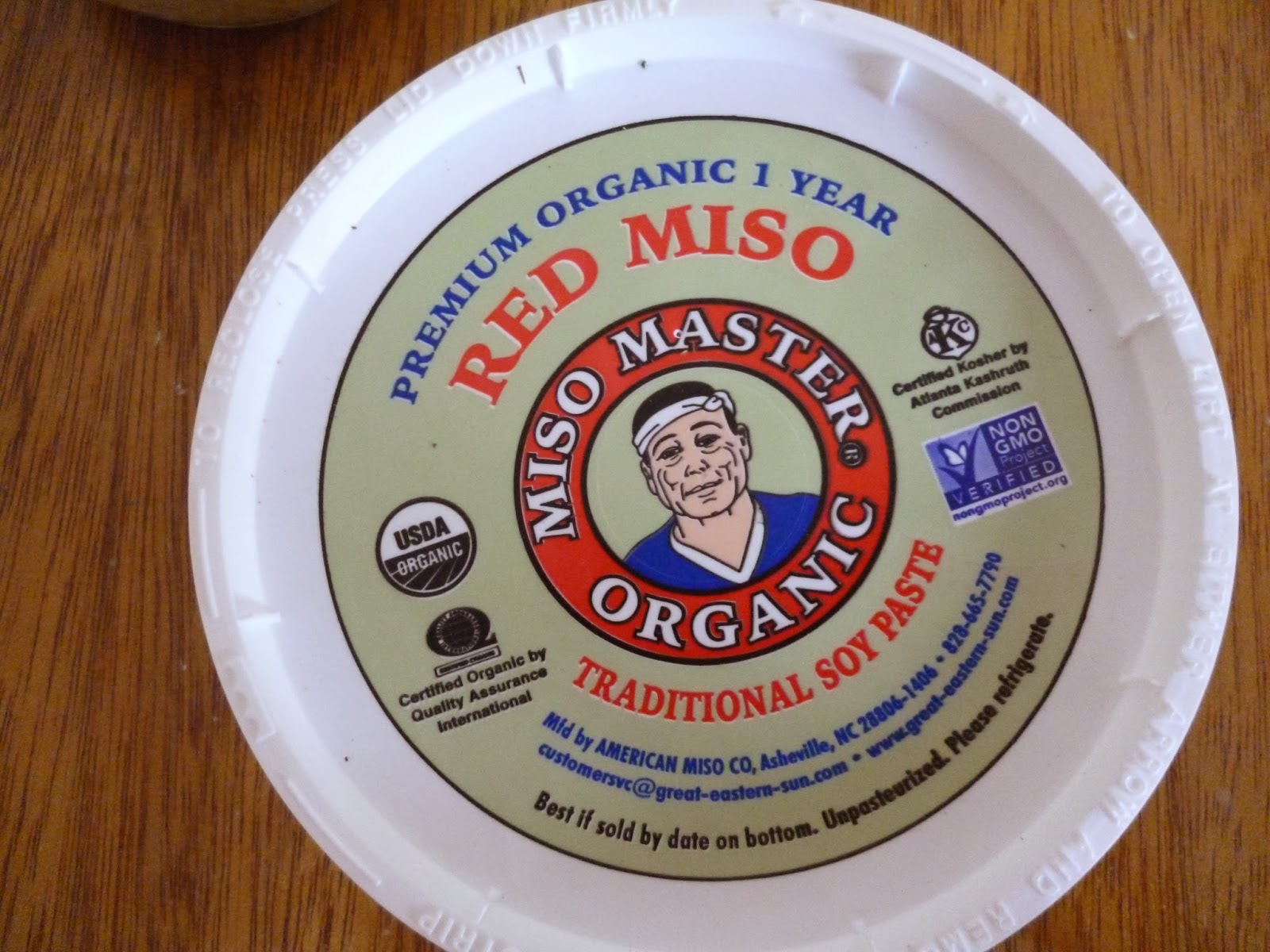
2.  Miso or fermented soybean paste.  Also not to be cooked.  Good in flavoring soups--to be added just before eating.


3.  Yogurt.  Only the kind with live lactobacillus acidophilus, please.  Cow, goat, sheep milk--all are fine.


As well as helping to normalize the gut, I like to engage in the regular practice of skeletal, muscular, and energetic manipulations.  These include:

1.  Acupuncture.  Part of traditional Chinese medicine to help stimulate the body's energy/chi and various meridian points.  Particularly helpful for rebalancing the body plus lessening any pain.

2.  Reflexology.  Here, a practitioner stimulates--by applying pressure to--the bottom of the feet, using them as a map to other parts of the body.  I find it both a good diagnostic and healing tool.  (For instance, say that the part of your foot that reflects the adrenals is painful when pressure is applied.  You then know to strengthen the adrenals with appropriate foods and supplements ... and have the practitioner work on that area until the application of pressure is no longer so painful.)

3.  Trigger Point Massage.  By finding a particular muscular knot or trigger point, you can get relief to the referred pain radiating from it.  I found this technique enormously helpful when I had frozen shoulders.

4.  Rolfing.  A massage therapy begun by Ida Rolf involving forceful manipulation to reposition tissues.  It can set the entire body humming again.  The artist Georgia O'Keeffe who knew Ida Rolf had regular sessions and lived to be 98 years old.  Pretty good recommendation!

Finally, I don't own a microwave or have any smart meters attached to my house.  As for my cell phone, I only use it for emergencies.  I simply feel there's a lot of invasive stuff out there so I try to live as simply, as naturally, as healthily as possible.

Saturday, December 7, 2013

Why Am I Surprised?

I just finished an eleven-week survey of the cost of food per item.  I used to think you could take a $5 bill into the grocery store and come out with several items.  "Several" isn't the operative word anymore.  One or barely two would be more like it since I found the average cost per item to be $4.  Okay, $3.96.  And that with my coop's 10% senior discount ... and no meat since I've been getting mine from the local farmer or the local butcher shop and don't count that into my shopping tab.  (Yes, mine is a casual survey.)  The least expensive item was a single banana--and organic, at that--for a quarter.  The most expensive was a container of good-quality (free-and-clear of all fragrances) laundry soap for $17.99 but that supposedly provided some 60+ washes.

I bought one head of cauliflower for $8, then had to pick through it for bugs, resorting to breaking it into very small florets and soaking them in a bowl of water.  You'd be surprised how many bugs I found.  Then I bought another less buggy cauliflower--which cost the same.  I divided that into eight $1 piles.

Here, then, is $1 worth of cauliflower

I was going to do an apple pie comparison--the cost if I made one as opposed to the cost of purchasing one at the farmers market, but the pie lady apparently died this past winter.  And then I was off gluten and sugar for awhile so I chucked that experiment.

When I gave a little dinner party recently--there were four of us in all--I figured it cost around $100.  Two bottles of wine, fresh apple cider, plus two nice cheeses for a cheese and cracker platter.  Some little munchy nibbles.  Four bone-in chicken breasts.  Cauliflower, chicken broth, half and half with which to make soup.  Spinach, potatoes, onions.  Ice cream plus a couple of bakery-made lemon bars.  The maple liqueur which we poured on the ice cream--yum!--had been a gift, so I figured that was free.  Of course, if we'd gone out to eat, the entree alone (with soup and dessert extra) would have come to around $28 each.  That plus tax and tip, and I dare say the cost would have risen by another $100.  So, I guess I saved $100 by doing the cooking and serving.

Actually, I don't find that people give dinner parties anymore.  If they get together--other than lunch or a summer outdoor barbecue (do people get together anymore to eat?)--it seems to be pot luck.  Casual.  "What can I bring?" they say when invited.  No, I want to reply--I'm doing the food; you're my guest.  It seems a bit of an odd concept these days.  Or, I'm finding that to be the case.  But don't you think it's fun to be invited out to dinner?  You dress up, you take a bottle of wine or a box of chocolates as a house gift, and you let your host/hostess prepare the evening.  Then, when it's your turn, you do the same for them.  Pot lucks have their place.  But so do dinner parties.